Electro-mechanical materials do their useful work under an applied electric field - yet conventional diffraction measurements are made on samples sitting at rest. What changes at the atomic scale when the field goes on, and how that change produces the strain or polarisation you measure at the macroscopic scale, is precisely the part the standard experiment cannot see.
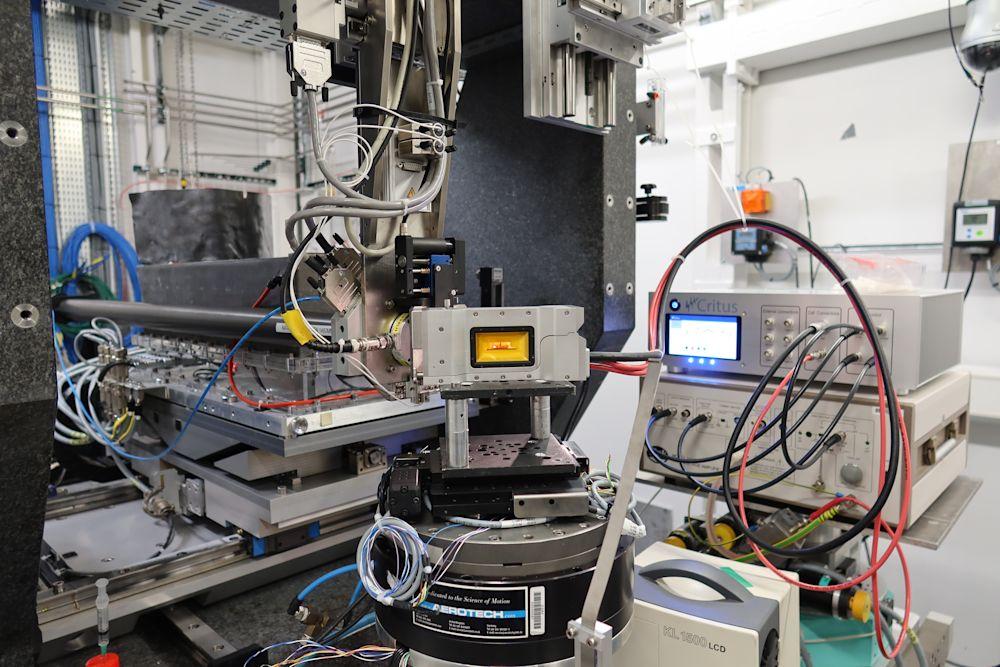
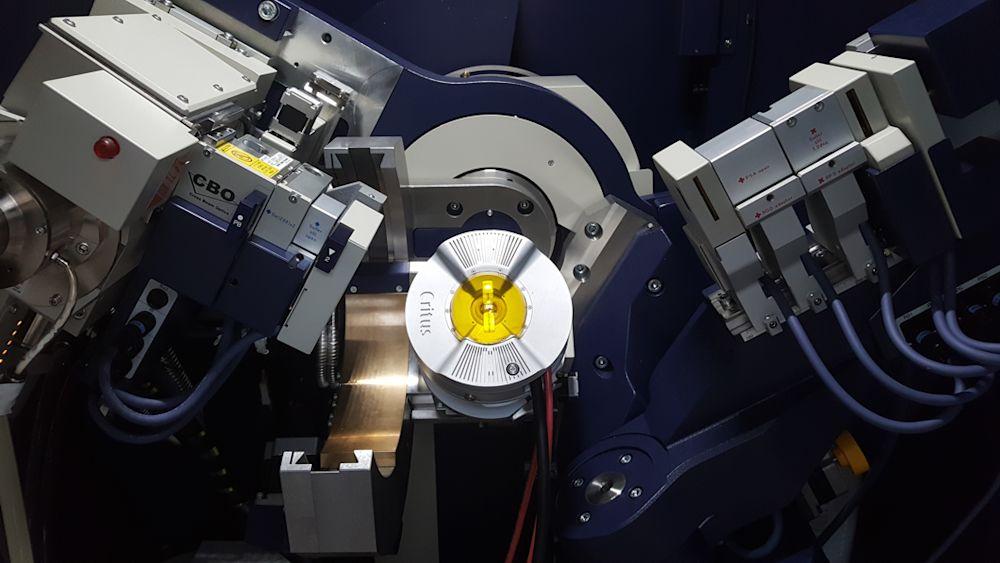
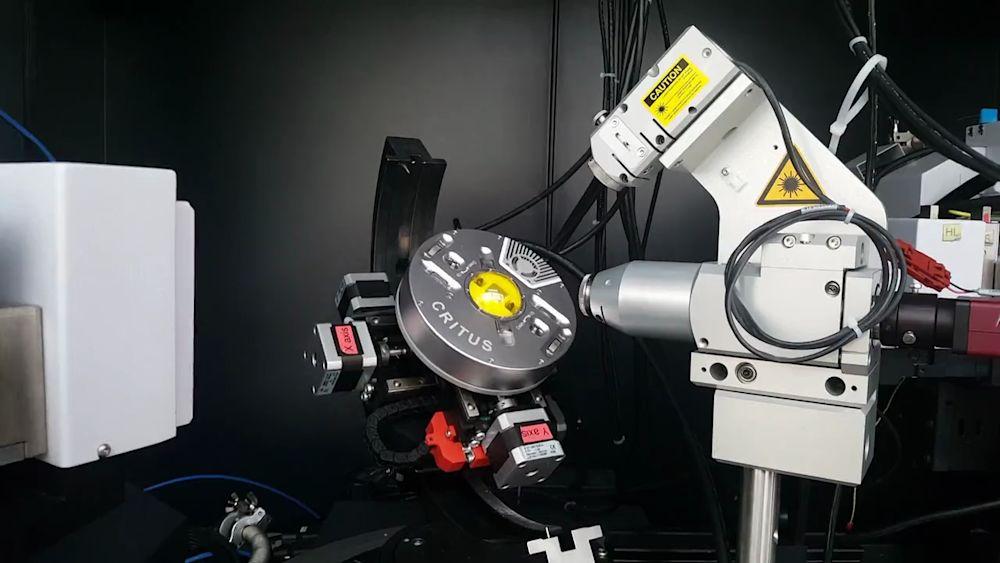
Critus cells close that gap. Each one is an in-situ environment that applies a controlled electric field to a sample inside your existing diffractometer, while simultaneously recording the electrical and electro-mechanical response. Structure and property are captured on the same timebase, so a shift in a diffraction peak can be attributed directly to the polarisation or strain measured alongside it.
Three geometries cover the common experimental cases. Bulk Transmission Geometry suits high-energy sources - synchrotron beamlines, or laboratory systems with Ag or Mo targets - and applies fields up to ±7.5 kV. Bulk Reflection Geometry works from the sample surface at up to ±5 kV, and is well matched to electro-ceramic and single-crystal research on standard laboratory diffractometers. Thin Film packages an entire probe station into a compact head unit, applying ±50 V static or cyclic fields with simultaneous current, polarisation, I-V and C-V measurement.
All three share the same design priorities. The geometry is optimised to keep the maximum solid angle open to the beam, so the technique extends beyond wide-angle scattering to full reciprocal space mapping and PDF measurements. High voltage is fully enclosed and interlocked, with no exposed conductors and no field applied during a sample change. A single ethernet connection exposes browser-based control, so data collection, viewing and download work from any PC on the network. Triggering is customisable in both directions, letting a cell act as master or slave to detector framing at a beamline or on the bench.
Each system also operates as a stand-alone property measurement instrument, so the hardware continues to earn its place between diffraction experiments.